
Cat Vaccinations in Flint, MI: What Michigan Law Says, What Your Cat Actually Needs, and When
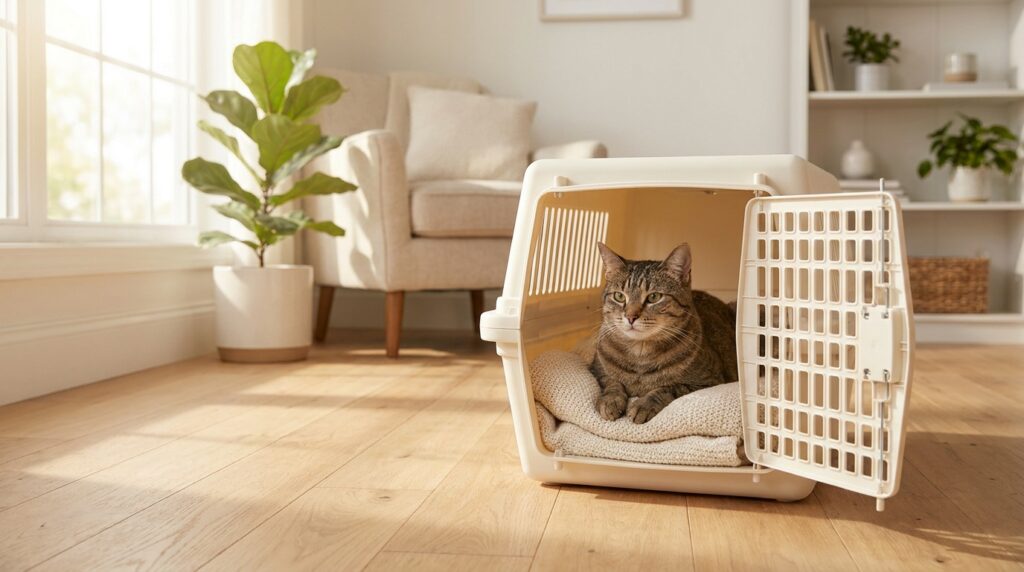
Your cat is due for shots, and somewhere between the carrier and the exam room you got handed a list of acronyms, FVRCP, FeLV, rabies, plus a question about whether she goes outside. If you are sorting out cat vaccinations in Flint, MI for a brand-new kitten or for a nine-year-old housecat who has never set a paw on the porch, the decision is simpler than the alphabet makes it look. Here is what the published feline guidelines recommend, what Michigan says about rabies, and what to ask when you book.
Cat vaccinations in Flint, MI: the short answer on what your cat needs
The core feline vaccines are those for feline panleukopenia virus (FPV), feline herpesvirus type 1 (FHV-1) and feline calicivirus (FCV), given together as the FVRCP combination, plus rabies, with feline leukemia virus (FeLV) treated as core for kittens. Everything beyond that is chosen for your individual cat, not pulled off a menu.
Core vaccines every cat is recommended to have
Vaccine guidelines sort products into two buckets. Core vaccines are recommended for all cats, because the diseases they cover are serious, widespread, or carry consequences that reach beyond the patient. Non-core vaccines are selected from an individual risk-benefit assessment: your cat's life stage, her lifestyle, and where she came from. That one distinction is the spine of every vaccination conversation you will have with a veterinarian, so it is worth holding onto.
The UC Davis School of Veterinary Medicine vaccination guidelines list the core feline vaccines as FHV-1, FCV, FPV, FeLV for kittens, and rabies, and list the feline infectious peritonitis (FIP) vaccine as "Not Generally Recommended," meaning it is not routinely recommended for household cats.
| Vaccine | What it helps protect against | Category |
|---|---|---|
| FVRCP | Panleukopenia, herpesvirus type 1, calicivirus | Core |
| Rabies | Rabies virus | Core |
| FeLV | Feline leukemia virus | Core for kittens, non-core after one year |
| FIP | Feline infectious peritonitis | Not generally recommended for household cats |
Non-core vaccines that depend on your cat's life
Here is the point that confuses most adult-cat owners, and it is not your fault. The AAHA/AAFP feline vaccination schedule lists FeLV as non-core for cats older than one year of age. A vaccine your kitten received as a matter of course becomes, in adulthood, a judgment call about her exposure risk.
That judgment call is the whole design of the system. The 2020 AAHA/AAFP Feline Vaccination Guidelines assign vaccines to core and non-core categories based on an individualized risk-benefit assessment, which is why two cats in two Flint households can walk out with two different plans and both be correct.
What FVRCP stands for, in plain words
FVRCP is one injection covering three viruses. Panleukopenia is often called feline distemper, and it is the "P." The R and C stand for viral rhinotracheitis (herpesvirus type 1) and calicivirus, the two agents behind most of the sneezing, runny eyes, and painful mouth sores that send cats and kittens to us looking miserable.
You will sometimes hear it called the feline distemper combination. Same product, older name.
Is the rabies vaccine required by law for cats in Michigan?
Michigan's health department states that Michigan law requires dogs and ferrets to be vaccinated against rabies, and that vaccination is recommended for all cats where a licensed vaccine exists. Read that carefully, because the wording matters: for cats, the state's language is a recommendation, not a statewide mandate.
What the state actually requires, and for which animals
Dogs and ferrets, required. Cats, recommended. That is the whole of it at the state level, and it is worth knowing which column your cat sits in before someone tells you otherwise.
Proof of vaccination usually takes the form of a rabies certificate, signed by the veterinarian who gave the dose at the time of the visit. A certificate typically records a description of your cat, the vaccine product used, the date it was given, and the date the next dose comes due. Keep it with her file. It is generally what you will be asked for if proof is ever needed.
Where a local requirement can still apply to your cat
A requirement can still reach your cat from somewhere other than state law. Local ordinances, licensing, travel across state or national borders, and situations where your cat will be housed somewhere other than your home all tend to come with their own rabies-vaccination rules. We don't publish those rules here, because they change and they vary by municipality. Confirm current local requirements with Genesee County Animal Control or the county health department before you need the answer in a hurry.
Why the clinical reason matters more than the legal one
The legal argument is the weaker of the two. Michigan's health department states that there is no post-exposure treatment available for animals, and that unvaccinated pets and domestic animals exposed to a potential rabies carrier may be required to be euthanized. Rabies is preventable through vaccination, but not treatable afterward, and that is the sentence that should decide this for you.
Michigan's own exposure picture is specific. Rabies in Michigan most commonly occurs in bats, and MDHHS publishes a current-year map of rabies-positive animals in Michigan by county, which you can check yourself rather than taking anyone's word for it. If your cat tangles with a bat or a stray, the state notes that animal bites should be reported to the local health department. Call us during open hours, or a 24-hour emergency veterinary facility if we are closed. For the longer version of this discussion, see our article on the rabies vaccine for cats.
The kitten series: why it is several visits, not one shot
A kitten needs a repeated series rather than a single injection, because the protection she borrowed from her mother fades at an age nobody can predict in advance. The series is repeated so that at least one dose lands after that protection is gone.
Weeks 6 to 20: how the FVRCP series is spaced
Kittens absorb maternally derived antibodies through colostrum in the first hours of life, and the guidelines describe them becoming susceptible to infection once those antibodies wane. The trouble is that waning happens on the kitten's schedule, not the calendar's.
So the schedule covers the whole window. The AAHA/AAFP general-practice schedule shows the earliest recommended subcutaneous FVRCP dose at 6 weeks of age, repeated every 3–4 weeks until 16–20 weeks of age. Most kittens handle the injection well, and the appointment is short.
The booster at six months of age
The same schedule marks a revaccination at 6 months of age. The reason is the same one that drives the whole series: if maternal antibodies were still hanging around at the last kitten booster, that dose may not have done its job, and the six-month visit narrows the window where your kitten is unprotected.
Where FeLV and rabies fit into kittenhood
For FeLV, the schedule shows the earliest recommended dose at 8 weeks of age, with a second dose 3–4 weeks after the first. For rabies, it does not fix an age at all. It lists the vaccine "as required by law," which is exactly why the Michigan section above matters so much to a Flint cat owner.
You can see the whole thing laid out by age in our guide to cat vaccinations by life stage, and everything else a first visit covers in our guide to caring for a new kitten.
Adult cat boosters: every year, or every three years?
"Annual shots" is no longer one single answer. The interval depends on which vaccine, how it is administered, and your own cat's exposure risk, three variables that often point in different directions for the same cat.
FVRCP: the interval depends on how the vaccine is given
The AAHA/AAFP schedule revaccinates the subcutaneous FVRCP combination every 3 years, while the intranasal form is revaccinated every year. Two forms of the same protection, two different rhythms.
| Vaccine and route | Published revaccination interval |
|---|---|
| FVRCP, subcutaneous | Every 3 years |
| FVRCP, intranasal | Every year |
| FeLV, FeLV-positive exposure likely | Annually |
| FeLV, exposure less likely | Every 2–3 years |
| Rabies | "As required by law" — ask which product your cat received |
FeLV: how exposure risk sets the interval
The same schedule revaccinates adult cats against FeLV annually when regular exposure to FeLV-positive cats is likely, and every 2–3 years when that exposure is less likely. So answer the household question honestly: does your cat share space, food bowls, or a cat flap with cats whose retrovirus status you don't know? A single indoor cat and a semi-open house with three visiting neighborhood cats are not the same risk.
Rabies: ask which product your cat received
Ask which rabies product your cat was given and when the next dose is due. We are deliberately not printing a one-year or three-year rule here, because the schedule defers to law and to the product's own labeling, and the honest answer lives in your cat's record rather than in an article.
Underneath all of it sits the principle from the 2020 guidelines: the decision to vaccinate, even with core vaccines, should rest on a risk-benefit assessment for each cat and each vaccine antigen, weighing benefit against likelihood of exposure and severity of disease. No vaccine protects every cat in every situation. Antibody titer testing exists and is a reasonable thing to raise with your veterinarian, so see our page on vaccine titer testing. What a result means for your cat is an exam-room conversation, not a web page.
Individual results vary by patient. No treatment outcome is guaranteed.
"But my cat never goes outside" — how to think about risk for an indoor-only cat
Indoor-only cats are still advised to keep core vaccination current. That is not a sales position, and it does not require any alarm to make the case.
What comes through the door
MDARD states that even if an animal is kept indoors, keeping rabies vaccination up to date serves as an important barrier if that animal is ever exposed to a wild or stray animal. An indoor life lowers the odds. It does not remove them.
The everyday routes are unglamorous. A cat who slips past a leg at the storm door. A foster kitten or a new adoptee joining the household. A move. A stay somewhere other than home while you travel.
Bats, strays and the Michigan picture
michigan.gov reported in 2023 that a nine-week-old kitten found as a stray in Oakland County was detected with rabies. That is the kind of stray kitten someone in Flint could easily pick up and bring home.
Because rabies in Michigan most commonly occurs in bats, the realistic indoor exposure route in an older Genesee County house is a bat in a basement, an attic, or a living room. That makes keeping bats out of your living space worth real attention, calmly and before it happens.
Which vaccines still earn their place indoors
MDARD names feline leukemia, panleukopenia, herpes virus and calicivirus among the key vaccines for cats, and notes that Michigan law requires dogs and ferrets to be vaccinated against rabies. The same logic applies to parasites: staying indoors lowers the risk, it does not remove it. That is why we wrote about flea and tick prevention for indoor cats, and why keeping an indoor cat active and happy belongs in the same conversation as her shots.
What a cat vaccination appointment should include — and what to ask when you book
Vaccines are chosen from an examination and a lifestyle conversation, not from a product list. So the appointment should include both, and you are entitled to ask what is in it before you arrive.
The exam is the part that isn't optional
The exam is where the risk-benefit assessment actually happens. It is also where a thin cat, a sore mouth, or a heart murmur gets found, because a cat who is due for boosters is a cat who is sitting still on a table for the first time in a year. Our page on a full wellness exam covers what a full examination looks at. When you are ready, you can schedule an appointment and we will take it from there.
Questions worth asking before the visit
When you call us about your cat's vaccines, the conversation starts with your cat rather than with a product list: her age, where she came from, whether she goes outside, and who else lives in the house. Here is what to confirm with us when you book, so nothing gets missed:
- Is a physical examination included in this visit?
- Is FeLV or retrovirus testing recommended before a first FeLV vaccine for my cat?
- Which non-core vaccines do you suggest for this cat's specific lifestyle, and why?
- Will the record note which product was used and which site it was given in?
- Will my cat's weight, teeth and heart be checked at this visit?
We are not quoting prices here, because that is a conversation for the phone. Ask what the visit includes when you call. If you want to know who would be looking after your cat, the team caring for your cat is on our About Us page.
Why the injection site gets written down
This one sounds like paperwork and is actually clinical. The 2020 guidelines recommend giving specific vaccine antigens at specific anatomical locations, so that if a mass develops at a site later it can be traced back to the product used, and note that this practice shifted tumor formation toward the distal limbs where surgery is more feasible.
Keep it in proportion. The same guidelines report that the occurrence of feline injection-site sarcoma remains infrequent and idiosyncratic. It is a reason to document carefully, not a reason to skip core protection. The FIP vaccine's "Not Generally Recommended" listing is a reminder that giving every available vaccine was never the goal.
After the shots: what's normal, and what needs a phone call
Many cats are quieter than usual for a day or so, sleep more, and eat a little less. The signs that matter are the ones that persist or escalate.
The first 24 to 48 hours at home
Give her a quiet room, her own litter box, and water. Let her hide if that is how she settles after a visit.
Signs that should be reported right away
The AAHA/AAFP guidance summarized by cfa.org advises that symptoms such as persistent vomiting, diarrhea, difficulty breathing or swelling after vaccination should be immediately reported to a veterinarian:
- Persistent vomiting
- Diarrhea
- Difficulty breathing
- Swelling
A lump at the injection site
The guidelines advise that post-vaccination swellings be properly evaluated rather than watched indefinitely. If you can still feel something at an injection site after it should have settled, have it looked at rather than monitored at home.
Frequently asked questions
Does my adult cat still need the feline leukemia vaccine?
It depends on her exposure, not her age alone. The AAHA/AAFP schedule lists FeLV as non-core for cats older than one year, and revaccinates adults annually when exposure to FeLV-positive cats is likely, or every 2–3 years when it is less likely. Describe your household honestly to your veterinarian and let the answer follow from that.
Should my cat have an exam at the same visit as the vaccines?
Yes. The examination is how the vaccine choices get made. The guidelines base vaccination on an individualized risk-benefit assessment for each cat and each antigen, and that assessment needs a cat on a table, not a form.
What do I do if my cat is exposed to a bat or a stray animal?
Your veterinarian or the local health department will advise you to keep your cat confined and away from other pets and people, and not to handle the wild animal yourself. Michigan's health department notes that animal bites should be reported to the local health department, that there is no post-exposure treatment available for animals, and that unvaccinated exposed pets may be required to be euthanized. Call us during open hours, or a 24-hour emergency veterinary facility if we are closed.
How do I get my cat's vaccination records from a previous veterinarian?
Ask the previous clinic for the records in writing, and ask whether they can send them straight to your new veterinarian. Our walkthrough on how to request your cat's past health records covers what to ask for, including the rabies certificate and the dates and products of previous vaccines.
Booking cat vaccinations in Flint, MI and keeping your cat's records straight
One next step, and it is the same one whether you have a six-week-old kitten or a cat whose last visit you cannot quite date: schedule an appointment and bring what you have.
What to bring and what to have ready
Bring any previous vaccination records or rabies certificate, a secure carrier, and a note of which vaccines you believe are due. A short description of your cat's daily life helps more than you would think: indoors or in and out, other cats in the house, any recent arrivals. You can review our pet vaccination services before you call.
When the hospital is open — and where to go when it isn't
Eascor Animal Hospital does not provide emergency care. An after-hours emergency should go to a 24-hour emergency veterinary facility.
Eascor Animal Hospital is closed Wednesday and Sunday. For after-hours emergencies, contact a 24-hour emergency veterinary facility.
Transferring records from a previous veterinarian
If your cat is coming to us from another practice, ask them to forward her file, or follow the steps in our guide to obtaining past health records. A complete history means nobody repeats a dose she already had, and nobody misses one she didn't.
When you are ready, call the hospital during open hours and we will get your cat on the schedule. We treat your pets like family, and we look forward to meeting you and your furry family members.
This article is for general educational purposes and is not a substitute for examination, diagnosis, or treatment by a licensed veterinarian.